AI Overviews Have Wiped Out Half Your Organic CTR. Here's Which Pages Are Safe.
SISTRIX's 100M-keyword study shows AI Overviews cut position-1 CTR by 59%. Informational pages are hit hardest. Here's how to audit your exposure.
You already suspected it. Now there's data.
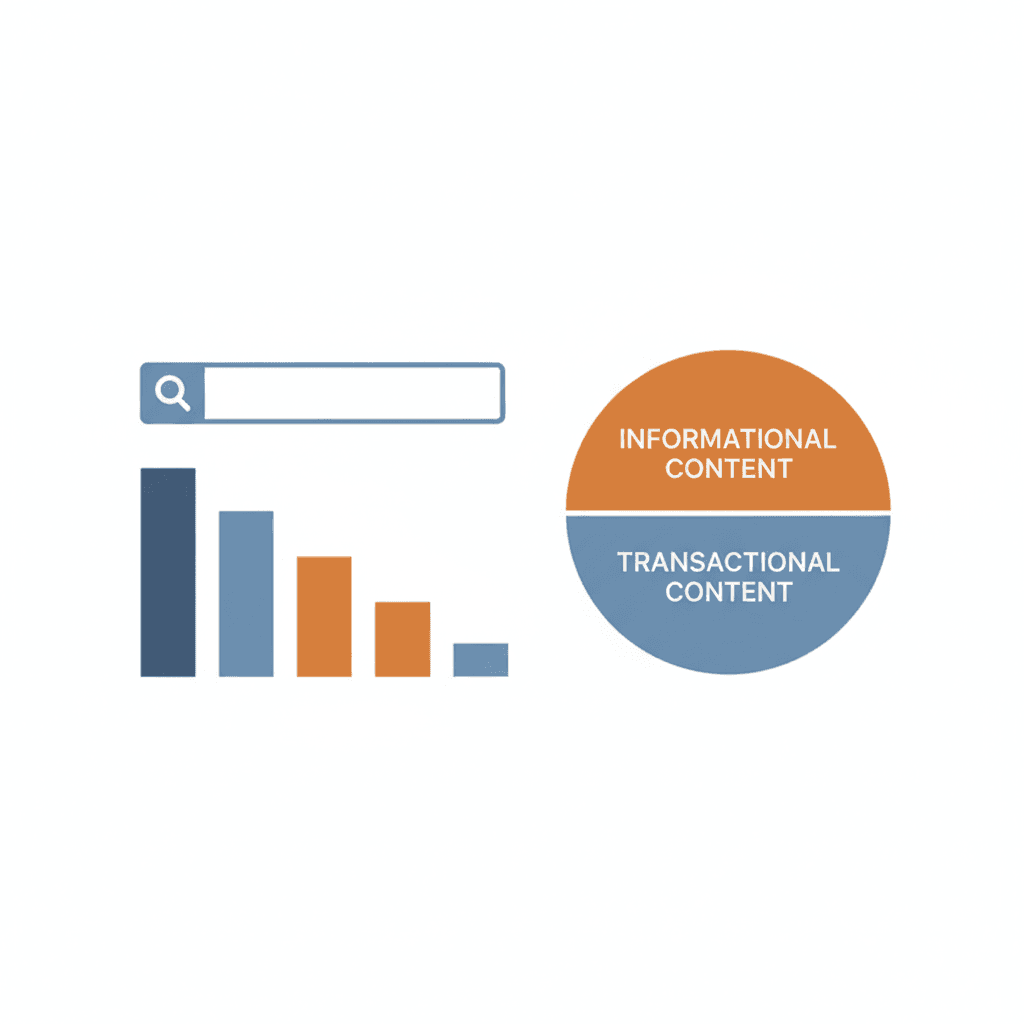
SISTRIX, a German SEO analytics firm, analysed more than 100 million keywords and published the most granular breakdown yet of what Google's AI Overviews are doing to organic click-through rates. The headline number: when an AI Overview appears, position-1 CTR drops from 27% to 11%. That's a 59% reduction. For a page that was generating 1,000 clicks a month, you're now looking at around 400.
But the averages hide something more important. Depending on what kind of content you publish, your traffic may be largely unaffected, or it may have already fallen off a cliff.
Key Takeaway: Google AI Overviews are cutting organic CTR by up to 59% at position 1, but the impact is split sharply between content types: informational articles are being decimated while transactional pages are largely spared. Auditing your pages by intent type is now essential to understand where your organic traffic is actually at risk.
Written by Derek Chua, digital marketing consultant and founder of Magnified Technologies. Derek has been tracking AI-driven search changes for SME clients since Google started rolling out AI Overviews in 2024.
The Numbers Are Not Averages You Can Rely On
The SISTRIX study used a dataset of over 100 million keywords in Germany, where AI Overviews now appear on roughly 20% of all searches. That figure is close to SE Ranking's finding of about 21% prevalence in the US market, which suggests we're looking at a structural shift, not a regional experiment.
Here's what the data shows when AI Overviews are present:
- Position 1 CTR: drops from 27% to 11% (59% decline)
- All-position combined organic CTR: drops from 57% to 33%
- Estimated lost clicks: 265 million per month across the German market
SISTRIX's founder Johannes Beus noted that averaged across all keywords (including those without AI Overviews), the total click loss works out to about 6.6%. That 6.6% figure is what you'll see quoted in headlines. The 59% position-1 figure is the one that matters if you're running a content-heavy website.
At Magnified, we've seen this pattern in client data too. Pages that were generating solid informational traffic have seen significant declines over the past 12 months, while product and service pages have held up much better. The SISTRIX data gives us a framework to explain why.
The Divide That Defines Who Gets Hit
SISTRIX broke the data down by content category, and the difference between winners and losers is stark.
Most affected categories:
- Parenting and baby content: over 24% of organic clicks lost
- Health content: well above average losses
- Home improvement content: above average losses
Least affected categories:
- Recipe sites (e.g., Chefkoch in Germany): around 1% click loss
- News and media: 7.37%, below average
- Shopping and travel booking: barely affected
The pattern here is not random. Informational queries, "what is", "how does", "why do", are exactly what AI Overviews are designed to answer. When someone searches "what causes high blood pressure", Google can generate a confident summary. The user gets their answer without clicking. Content sites that built their traffic on these queries are the ones taking the biggest hits.
Transactional queries are a different story. When someone searches "book hotel in Singapore" or "buy ergonomic chair under $500", an AI Overview can summarise options, but it cannot actually complete the transaction. The user still needs to click somewhere. These pages are mostly spared.
The same logic applies to decision-stage queries. "Best accounting software for small business" sits in the middle: an AI Overview can list options, but a buyer who's serious about making a choice will still click through to compare properly.
What This Means for Your Site
If you're an SME with a business blog, this data should prompt a content audit, not a panic.
The first thing to do is categorise your top-traffic pages by intent:
Purely informational (high risk): Educational articles that answer factual questions with no commercial intent. "What is Google Analytics", "how does VAT work", "what are the symptoms of burnout". These are exactly what AI Overviews are designed to replace.
Commercial investigation (moderate risk): Comparison articles, "best X for Y" guides, review content. These are partially at risk. An AI Overview can surface options, but readers researching a purchase still tend to click through for detail.
Transactional (low risk): Service pages, product pages, pricing pages, booking flows. If someone is looking to buy or enquire, they need to visit your page. AI Overviews do not replace the action.
Local (low risk for now): "Accountant in Singapore", "renovation contractor near me". These trigger local pack results more than AI Overviews, and local intent is harder to satisfy with a summary.
If the bulk of your organic traffic comes from purely informational pages, you have a structural problem that no amount of on-page SEO will fix. The issue is query type, not execution quality.
The Right Response Is Not to Abandon Informational Content
Before you start pruning your blog, a few things worth considering.
Informational content still has value, just not primarily as a source of direct clicks anymore. A well-written article that gets cited in AI Overviews can generate brand exposure without a click. An article that ranks for an informational query and earns a featured snippet or AI Overview citation can still build authority. The traffic model has changed; the authority-building model has not entirely.
What has clearly changed: building a business on informational search traffic as your primary acquisition channel is now a significant risk. That was probably already true before AI Overviews, given how competitive those queries were. AI Overviews have accelerated the timeline.
The practical pivot for most SMEs: use informational content to build authority and earn AI citations, but don't expect it to carry your lead generation. That work falls to transactional and commercial-intent content, and to channels that AI can't redirect, like email, direct, and referral.
How to Audit Your Own Exposure
Here's a straightforward process for understanding where your site actually stands.
Step 1: Pull your top-traffic pages from Google Search Console. Filter to the last 3 months. Export the top 20-30 pages by clicks.
Step 2: Classify each page by intent. Informational, commercial, transactional, or local. Be honest. An article titled "What is content marketing" is informational, regardless of how you've tried to optimise it.
Step 3: Check which queries trigger AI Overviews. Search your target queries in an incognito browser. Note whether an AI Overview appears above organic results. SISTRIX found about 79% of AI Overviews appear before organic listings.
Step 4: Look at your CTR trend. In Search Console, compare impressions versus clicks over the last 12 months for your most informational pages. If impressions have held steady but clicks are declining, that's the AI Overview effect in action.
Step 5: Decide what to do with each category. Informational pages: shift goal from clicks to citations. Commercial pages: strengthen depth and specificity so they earn clicks even when AI Overviews appear. Transactional pages: protect and invest in them. They're your most defensible traffic.
The Category Split Is a Useful Filter for New Content Too
Going forward, before writing any new content, it's worth asking: does this query type trigger AI Overviews? If yes, what's the purpose of this content? If the answer is purely organic traffic, reconsider. If the answer is authority-building, citation potential, and supporting a commercial cluster, proceed.
At Magnified, this is now part of how we evaluate content briefs. We still write informational content, but with different success metrics. Traffic is no longer the only goal. Being cited in AI responses, building topical authority for commercial clusters, and supporting the buyer's journey before they hit transactional pages are all legitimate reasons to write content that may not drive many direct clicks.
Frequently Asked Questions
How much has Google AI Overviews reduced organic CTR? According to SISTRIX's analysis of over 100 million keywords in Germany, AI Overviews reduce position-1 organic CTR by 59%, dropping from 27% to 11%. Across all positions, organic CTR falls from 57% to 33% when an AI Overview is present. Averaged across all searches including those without AI Overviews, the total estimated click loss is about 6.6%, but this figure understates the impact on content-heavy informational sites.
Which types of pages are most at risk from AI Overviews? Informational pages that answer factual questions are most affected. Content covering health, parenting, general how-to questions, and definitional articles have seen the largest CTR drops. Pages with commercial or transactional intent, including service pages, product pages, and booking flows, are largely unaffected because users still need to click to complete an action that an AI summary cannot perform for them.
Does this data apply to Singapore, or is it only relevant to Germany? The SISTRIX study covers Germany, but the pattern aligns closely with US data from Pew Research Centre and SE Ranking. AI Overviews appear on roughly 20-21% of searches in both markets. The core finding, that informational queries are hit harder than transactional ones, is a function of how AI Overviews work, not a market-specific effect. Businesses in Singapore with informational-heavy content strategies should treat this data as directionally applicable.
Should I delete my informational blog content if it's losing traffic? Not necessarily. Informational content still contributes to topical authority, internal link equity, and AI citation potential. The question is what goal you assign it. If it was previously generating significant lead traffic, that goal needs to be reassigned. If it supports your overall topical coverage and keeps your site visible in AI search summaries, it still has a role. Evaluate each piece on its actual current contribution rather than a blanket deletion policy.
What should SMEs focus on to protect their organic traffic? Prioritise transactional and commercial-intent content where users still need to click to take action. Audit your top informational pages and reclassify their success metrics away from pure clicks. Build email list capture into any high-traffic informational pages you keep, since email is a channel AI cannot redirect. Invest in local SEO if your business serves a specific geography, as local intent queries are less susceptible to AI Overview displacement.
Magnified's SEO and generative engine optimisation services help SMEs build a content strategy that accounts for where search is going, not just where it's been.
Work With Magnified
Ready to turn traffic into leads?
We help SMEs grow with AI-powered SEO, content marketing, and paid ads. If you're getting traffic but not leads — let's fix that.