Google Just Put Ads Inside AI Mode. Here's What It Means for Your Search Budget.
Google's new AI Mode ad formats let Gemini write your ad on the spot. Here's how Conversational Discovery ads and Highlighted Answers work, and what Singapore SMEs should prepare now.
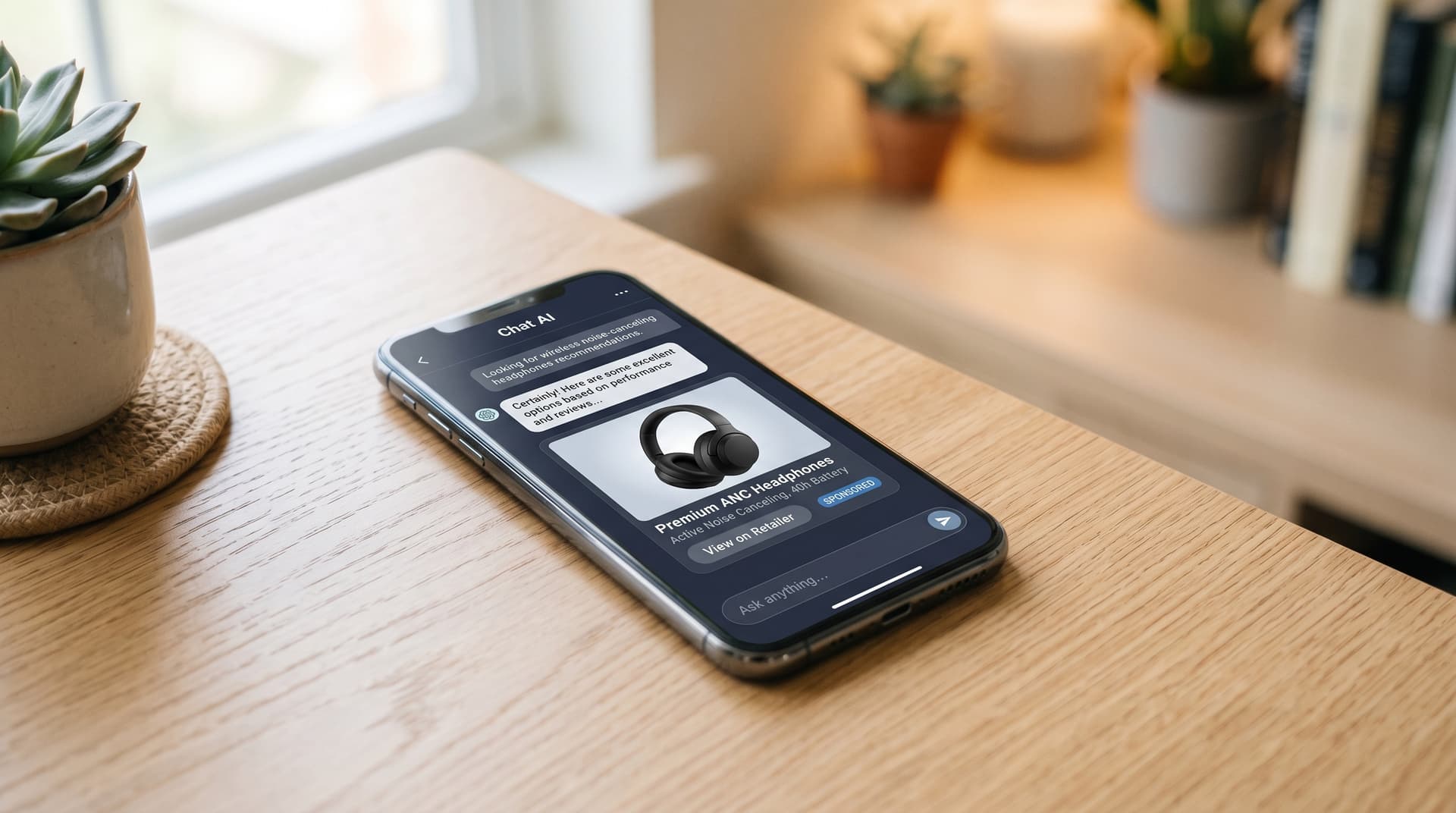
At Google Marketing Live on 20 May 2026, Google announced that ads are coming directly inside AI Mode and AI Overviews. Not beside the answer. Inside it. Gemini now writes ad creative on the spot, tailored to each person's question, and adds its own independent explainer next to your ad. If you run Google Ads for a Singapore business, this changes what you're actually buying.
Key Takeaway: Google's new AI Mode ad formats (Conversational Discovery ads, Highlighted Answers, and AI-powered Shopping ads) let Gemini assemble your ad per query instead of serving a fixed creative. The levers that decide whether you show up are structured product data, asset quality, and landing page content, not a clever pre-built banner. These are the same signals that already drive your organic AI visibility. The work overlaps. The formats are US-only for now, so this is preparation time, not panic time.
Written by Derek Chua, digital marketing consultant and founder of Magnified Technologies. Derek has been tracking how AI search changes paid and organic performance across Singapore SME accounts since early 2025.
Let's be clear about the timeline first, because it affects how urgently you should act. As of the announcement, Conversational Discovery ads and Highlighted Answers are in testing in the United States, on mobile and desktop. AI-powered Shopping ads are slated for "the coming months," also US-first. Singapore advertisers cannot switch these on today. But the preparation that makes them work is the same preparation that improves your current campaigns, so there is no reason to wait for the rollout to start.
What Actually Got Announced
Google unveiled four things. Three matter for most SMEs.
Conversational Discovery ads. When someone asks AI Mode a detailed question, Gemini reads the intent and builds the ad creative to match, highlighting the specific features that answer that exact query. You are no longer uploading one fixed ad and hoping it fits. Gemini assembles it per search from the assets and data you supply.
Highlighted Answers. When AI Mode produces a recommendation list ("best accounting software for a small business," for example), eligible high-quality ads can appear as one of the highlighted items in that list. This is placement inside the answer itself.
AI-powered Shopping ads. For product searches, Gemini pulls your relevant products and writes a custom explainer on why a product might suit the shopper. This runs through AI Max for Shopping and Performance Max.
There is also a Business Agent for Leads, a Gemini-powered chat embedded in your ad that answers questions from your website instead of relying on a static form. Useful for service businesses, but earlier in its rollout.
Two details are worth pausing on. Every one of these carries a clear "Sponsored" label. And every one includes an independent, Gemini-written explainer that evaluates your product separately from the creative you supplied. Google is grading your offering in front of the customer, in its own words, right next to your ad.
Why This Rewards the Work You Should Already Be Doing
Here is the part that should reassure you rather than alarm you.
When Gemini builds the ad, it draws on your structured product data, the range and quality of your assets, and the content on your landing pages. The old lever (a single well-designed creative) matters less. The new levers are data completeness, asset diversity, and landing page substance.
Those are not paid-media levers. They are the same signals that decide whether your content gets cited in organic AI answers. Clean structured data. Clear, factual pages that answer real questions. Strong product information. If you have been doing genuine generative engine optimisation work, you are already building the foundation these ad formats run on.
This is the same pattern we wrote about when Gemini became the #2 AI referral source: the work travels. Content and data prepared for organic AI visibility now also feeds paid AI placements. One foundation, multiple surfaces. Businesses that fragment their effort into separate "SEO," "GEO," and "paid" silos will keep redoing the same groundwork three times.
The independent explainer raises the stakes on honesty, too. Gemini synthesises product context on its own. If your landing page overpromises and your structured data says something different, the explainer can expose the gap to the customer at the worst possible moment. Accurate beats impressive here.
What Singapore SMEs Should Do Now
You can't run these formats yet. You can be ready when they reach Singapore. Five practical steps.
Get your campaigns onto the right campaign types. The new formats run through Performance Max, AI Max for Search, and AI Max for Shopping. If you are still managing tightly controlled manual search campaigns, start building comfort with these AI-driven types now. Our guide to Performance Max controls for SMEs covers how to keep oversight while using them.
Fix your structured data. Product feeds, business information, and on-page schema are now inputs to your ad creative, not just your organic listings. Incomplete or messy data limits what Gemini can assemble. Our schema markup guide for Singapore SMEs is the place to start.
Diversify your assets. Per-query creative needs raw material. More headlines, more descriptions, more images, more genuine product detail give Gemini more to work with. Thin asset libraries produce thin ads.
Audit your landing pages for substance. Gemini reads them. Pages that actually answer the question, with real specifics rather than marketing filler, give the model accurate material for its explainer. Pages that are all hero image and no content give it nothing useful.
Tighten your conversion signals. AI-driven campaign types optimise on the data you feed them. Clean conversion tracking and first-party data become more valuable, not less, as Google's automation does more of the targeting.
None of these are throwaway preparation. Every one improves the campaigns you are running today.
What This Doesn't Mean
A few things to keep in proportion. This is not the end of paid search as you know it; it is a new set of formats layered onto the existing system. It does not mean you should abandon manual control overnight, especially on smaller budgets where automation can spend inefficiently without guardrails. And it does not mean AI search is suddenly driving the majority of your traffic. As we covered when AI Overviews reached half of all searches, the surface is large and growing, but conventional search still does most of the work for most SMEs today.
The honest read: this is a strong directional signal about where Google is taking paid search, with a preparation window before it lands in Singapore. Use the window.
Working With Magnified
If you'd like help getting your Google Ads account ready for AI Mode formats, from campaign structure to structured data to landing page substance, we offer a free 30-minute consultation. We'll look at your current setup and tell you honestly which of the five steps above will move the needle for your account, and which are not worth your time yet.
Frequently Asked Questions
Can I run Google's AI Mode ads in Singapore right now? No. As of the May 2026 announcement, Conversational Discovery ads and Highlighted Answers are in testing in the United States only, and AI-powered Shopping ads are expected in the coming months, also US-first. There is no confirmed Singapore date yet. The point of preparing now is that the groundwork (structured data, assets, landing pages, campaign types) improves your current campaigns regardless of when the formats arrive.
What campaign types do these new formats require? Performance Max, AI Max for Search, and AI Max for Shopping. Conversational Discovery ads and Highlighted Answers use Performance Max and AI Max for Search; AI-powered Shopping ads use AI Max for Shopping and Performance Max. If you only run manual search campaigns, that is the first gap to close.
Does Gemini really write my ad for me? In effect, yes. Rather than serving one fixed creative, Gemini assembles the ad per query from the assets and structured data you provide, tailoring it to the searcher's specific question. You control the inputs (headlines, descriptions, images, product data, landing pages); Gemini controls the assembly. This is why asset diversity and data quality matter more than a single polished banner.
What is the independent explainer, and why does it matter? Each new format includes a Gemini-written explainer that evaluates your product or service on its own, separately from the creative you supplied, and shows that context next to your ad. It is designed for transparency. For advertisers, it means accuracy matters more than spin: if your landing page and structured data overstate what you offer, the explainer can surface the discrepancy to the customer.
Is preparing for this different from my GEO and SEO work? Largely no, and that is the useful part. The signals that make these ad formats work (clean structured data, substantive landing pages, accurate product information) are the same signals that earn organic citations in AI answers. Work done for one benefits the other. Fragmenting paid and organic preparation into separate efforts just means doing the same groundwork twice.
For more on how AI search is reshaping both paid and organic visibility, read our analysis of Gemini overtaking the field as the #2 AI referral source and our guide to Performance Max controls for SMEs.
Work With Magnified
Ready to turn traffic into leads?
We help SMEs grow with AI-powered SEO, content marketing, and paid ads. If you're getting traffic but not leads — let's fix that.