Best POS Systems in Singapore (2026): An Honest Comparison
A candid 2026 guide to choosing a POS system in Singapore — the main types, who each one suits, real pricing ranges, and the questions to ask before you sign.
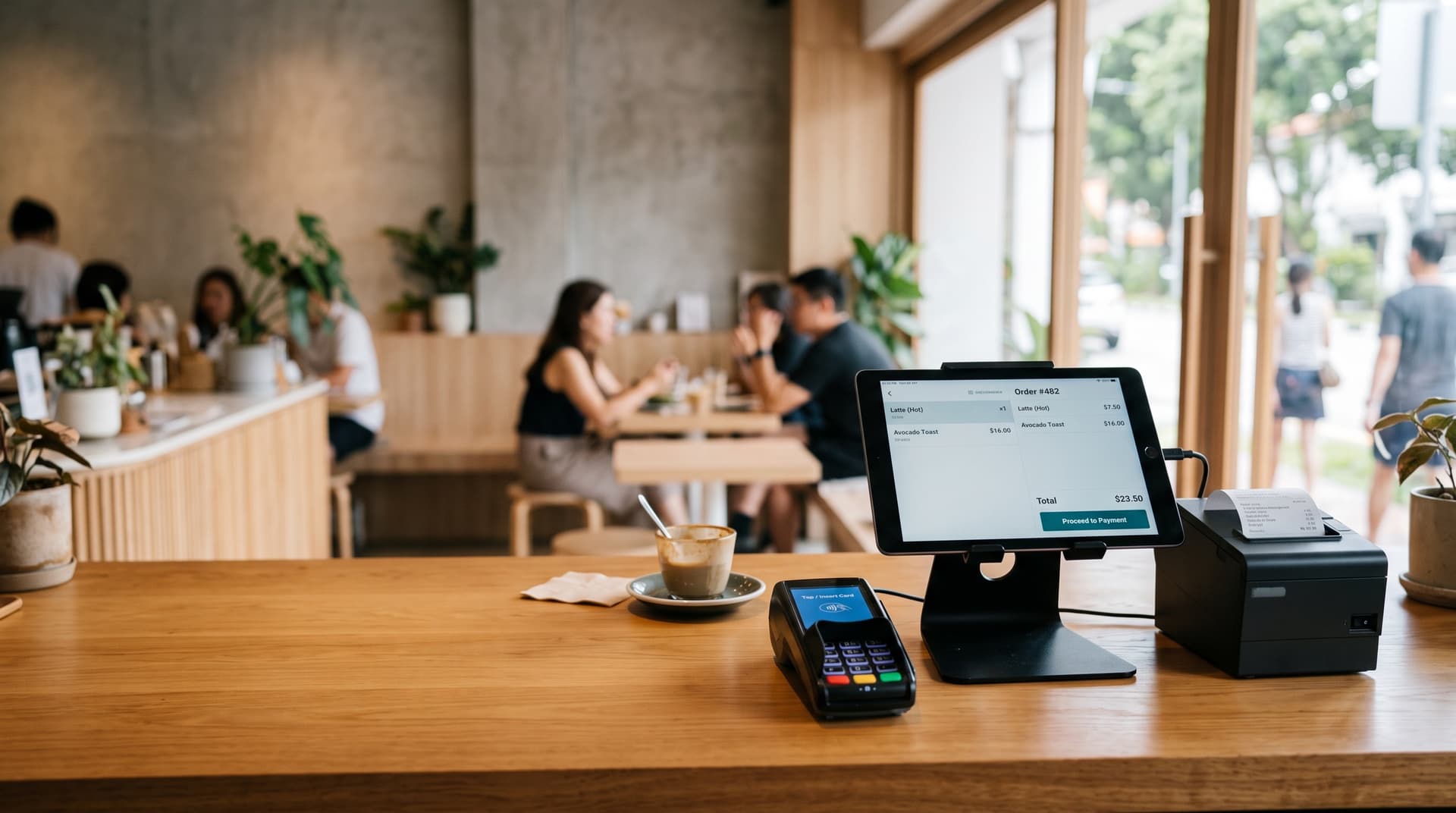
Most "best POS systems in Singapore" lists are written by one of the vendors on the list, and you can usually tell — the company that paid for the article wins every category. We are going to do something slightly unusual and tell you upfront where the bias sits.
Key Takeaway: There is no single best POS system in Singapore — there is a best fit for your business type, transaction volume, and budget. Established terminal systems suit hardware-heavy retail and high-volume F&B, all-in-one POS-plus-payments tools suit merchants who want one vendor, payment-first tools suit micro-merchants, and cloud POS (including our own, at a flat S$1/day) suits SMEs wanting full features without a big upfront spend. Match the system to how you actually trade, not to whoever ranks first on Google.
Written by Derek Chua, digital marketing consultant and founder of Magnified Technologies. Magnified builds a cloud POS system for Singapore SMEs, so we are one of the options compared below. We have tried to be fair about where competitors fit better, and everything here is based on each vendor's publicly stated positioning and features — confirm current pricing with the vendor before you decide.
Disclosure first
Magnified is featured in this comparison because we make a POS product. We have a commercial interest in you choosing ours. We have written this anyway because the honest version is more useful to you — and because a list that pretends a café in Tiong Bahru and a 12-outlet retail chain need the same system is not worth reading. Where a competitor is the better call for your situation, we say so.
How to actually choose a POS system in Singapore
Before comparing brands, get clear on five things. The right system falls out of the answers.
1. Your business type. F&B has needs retail does not — table management, kitchen display, QR self-ordering, split bills. Retail cares about inventory depth, barcode scanning, and stock across outlets. Service businesses care about appointments and packages. A "general" POS that does all three usually does none of them especially well.
2. Transaction volume and payment mix. If most of your sales are cards, PayNow, and GrabPay, your effective cost is dominated by payment-processing rates, not the software fee. A "cheap" POS with high card rates can cost more than a pricier one with transparent rates. Always compare the all-in cost, not the headline subscription.
3. Number of outlets. Single-outlet pricing and multi-outlet pricing are different conversations. If you plan to expand, ask what the second and third outlet cost before you commit to the first.
4. Hardware. Some vendors sell you a bundled terminal; others run on an iPad or Android tablet you already own. Bundled hardware is convenient but raises the upfront cost, so factor it into the all-in figure rather than the headline subscription. (Whether any of it is grant-supportable is a separate question — see the PSG section below.)
5. Contract and lock-in. Ask about contract length, what happens to your data if you leave, and whether the menu, customer list, and sales history are exportable. Owning your data matters more than most merchants realise until they try to switch.
The main types of POS system in Singapore
Rather than rank specific brands — pricing and positioning in this space change constantly, and any list naming a single winner is usually selling something — it is more useful to understand the four archetypes on the market. Most systems you will shortlist fall into one of these, and the right archetype falls out of your answers to the five questions above.
Established terminal-based POS
The traditional category: a dedicated terminal, often bundled with printer and cash drawer, sold by long-standing local providers with deep F&B and retail roots and on-the-ground support. Best for: hardware-heavy, high-volume operations — full-service restaurants and larger retail shops — that want robust kit and a vendor with a long local track record. Worth checking: total cost once hardware and per-outlet modules are added, and how modern the cloud reporting feels if remote management matters.
All-in-one POS-plus-payments
Newer, well-funded players that bundle POS, payments, loyalty, and inventory on their own supplied terminal, with a clean modern interface. Best for: merchants who want POS and payments from a single vendor on out-of-the-box hardware. Worth checking: how the bundled payment-processing rates compare to taking payments through a separate provider — that is where the real annual cost often sits.
Payment-first tools with light POS
Providers that lead with cheap, simple payment acceptance (cards, PayNow, GrabPay, links, online checkout) and offer POS as a feature on top. Best for: micro and small merchants whose primary need is taking payments simply, with modest POS requirements. Worth checking: whether the POS feature depth is enough if you run a busy F&B floor or carry deep inventory.
Cloud POS on your own tablet
Software-led systems that run on an iPad or Android tablet you already own, billed as a subscription, with remote reporting and automatic updates. Best for: SMEs that want full features and multi-outlet visibility without a large upfront hardware spend. Worth checking: that the feature set genuinely covers your business type rather than being a thin app.
Where Magnified fits
The disclosure applies here: our own product sits in the cloud-POS category. It runs the whole counter for cafés, restaurants, bars, QSR, retail, and service businesses — QR self-ordering, a multi-station kitchen display, tiered membership and a stored-value wallet, blind cash reconciliation, and real-time multi-outlet analytics — at a flat S$1 a day, billed annually at S$365, with one plan and no tiers, and payment-processing rates published upfront. Best for: SMEs that want full F&B-and-retail features without per-module pricing or a sales negotiation, and who value a transparent flat fee. Where we are not the best call: if you need a specific enterprise integration, deep franchise-grade hardware, or a provider with a decade of installs behind one particular vertical, an established terminal-based system may suit you better. You can see what is included on our POS system Singapore page.
How much does a POS system cost in Singapore?
It ranges widely. The honest answer has three layers:
- Software subscription: anywhere from roughly S$0 (payment-first tools that make money on processing) to a few hundred dollars per outlet per month for feature-rich or enterprise systems. Our own flat S$365/year sits at the low end deliberately.
- Hardware: a tablet-based system can run on a device you already own; a bundled terminal, printer, and cash drawer can add several hundred to a couple of thousand dollars upfront.
- Payment processing: typically a percentage per transaction. This is the cost most merchants underestimate, and over a year it usually dwarfs the software fee.
When you compare quotes, compare the all-in twelve-month cost for your actual transaction volume, not the advertised monthly figure.
Which POS system is the best?
There isn't one, and any list that names a single winner for every business is selling something. For a small café that wants QR ordering and a kitchen display without a big upfront spend, a flat-fee cloud POS is hard to beat. For a multi-outlet retail chain with complex inventory, an established retail specialist with strong hardware is often the safer choice. For a market stall that mostly needs to take PayNow and cards, a payment-first tool is the simplest path. Decide your business type first; the "best" follows from it.
What is the cheapest POS system in Singapore?
Payment-first tools can appear cheapest because the software is free or near-free — but they recover the cost through processing rates, so the true cost depends on your volume. Among full-feature POS systems, a transparent flat fee is usually the cheapest predictable option: our own S$1/day (S$365/year) is among the lowest flat fees for a system that includes F&B and retail features, membership, and multi-outlet support. "Cheapest" and "best value" are different questions — the cheapest headline price with high card rates can be the most expensive system overall.
Can you use the PSG grant for a POS system?
The Productivity Solutions Grant (PSG) supports pre-approved digital solutions for Singapore SMEs, and some POS systems are listed as supportable solutions. Eligibility, the supportable amount, and which specific solutions qualify change over time and are administered through the official channels, so check the current list and criteria on the Enterprise Singapore / GoBusiness portal and confirm with the vendor whether their specific package is pre-approved. Do not assume any POS system is grant-eligible until you have verified it against the official list.
Working With Magnified
We are upfront that we make a POS product, so take this in the spirit it is offered: if you would like help working out which system fits your business — ours or someone else's — we offer a free 30-minute consultation. On the call we will ask how you trade, what your payment mix looks like, and where you want to grow, and tell you honestly whether our cloud POS is the right fit or whether you would be better served elsewhere. You can also read what our own POS system for F&B, retail and service businesses includes before deciding.
Frequently Asked Questions
Which POS system is best for a café in Singapore? For a café, the features that matter most are QR self-ordering, a kitchen display, fast membership at the counter, and a flat predictable cost. A cloud POS built for F&B handles these without a large upfront spend. Established F&B brands also serve cafés well; the deciding factors are usually price predictability and how quickly staff can learn the system during a busy service.
How much should a small business expect to pay for a POS system? Budget across three layers: software (from near-zero to a few hundred dollars a month, with flat-fee options like S$365/year at the low end), hardware (zero if you use your own tablet, up to a couple of thousand for a bundled terminal), and payment processing (a percentage per transaction). For most small merchants the processing rate, not the subscription, is the largest annual cost.
Is a cloud POS better than a traditional terminal? Cloud POS gives you remote reporting, automatic updates, and multi-outlet visibility, and usually runs on affordable tablet hardware. Traditional terminals can be more robust in high-volume, hardware-heavy environments. For most Singapore SMEs the cloud approach wins on cost and flexibility; very high-throughput or franchise operations sometimes still prefer dedicated terminals.
Can I switch from my existing POS system without losing my data? You should be able to. Before switching, confirm with both your current and prospective vendor that your menu or product catalogue, customer and membership list, and sales history are exportable. A reputable vendor will help you migrate. If a vendor cannot export your data, treat that as a warning sign about lock-in.
Does a POS system need to be PDPA compliant? Yes. A POS that stores customer details, membership data, or marketing contacts handles personal data under the PDPA, so you are responsible for consent, secure storage, and how that data is used. Ask any vendor how customer data is stored, where, and what happens to it if you leave.
If you found this useful, you may also like our honest look at why over 2,400 F&B outlets closed in Singapore and what the survivors did differently, and our guide to how to choose an SEO agency in Singapore if growing your own discoverability is the next priority.
Work With Magnified
Looking for a POS system that fits?
Our cloud POS runs the whole counter for F&B, retail and service businesses — just S$1/day. Or talk to us and we'll help you work out which system fits, even if it isn't ours.