The Uncanny Valley Problem: Why AI in Your Customer Experience Needs to Know Its Place
AI customer service fails when it triggers an evolutionary imposter alert. Here's where to deploy AI in your business, and where to keep humans.
Written by Derek Chua, digital marketing consultant and founder of Magnified Technologies. Derek works with Singapore SMEs to deploy AI in ways that grow their business without alienating the customers they worked hard to win.
Key Takeaway: AI customer experience fails not because the technology is bad, but because it triggers an ancient evolutionary "imposter alert" when it pretends to be human. The fix is not better AI. It is smarter deployment. Keep AI in transactional interactions, and keep humans where relationships are built.
Your chatbot might be costing you customers, and you will never see it happen.
Nobody files a complaint. Nobody sends an angry email. They just go quiet, stop responding, and eventually buy from someone else. The interaction that lost them felt fine on your end: a message sent, an acknowledgement received. But on their end, something felt off. Not broken. Not rude. Just... off.
This is the uncanny valley at work. And it is one of the more predictable ways AI deployment goes wrong for SMEs.
Why "Almost Human" Is Worse Than "Clearly a Bot"
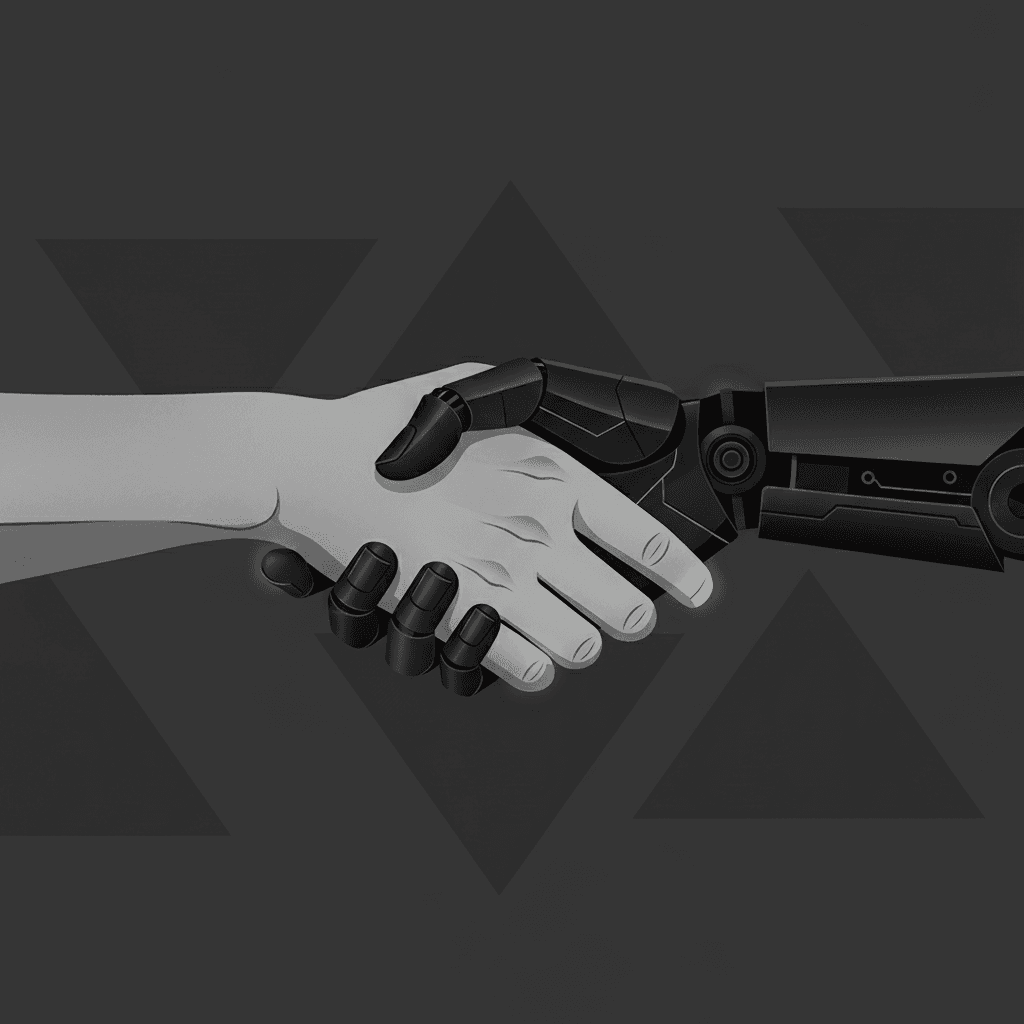
Seth Godin wrote about this recently, but the concept predates AI entirely. Masahiro Mori named it fifty years ago in robotics: when something looks or behaves almost-but-not-quite human, it triggers deep discomfort. Not mild preference. Visceral, gut-level discomfort.
Two evolutionary alarm systems fire at once. The first is a corpse alert. Something that looks alive but is not alive is dangerous. It was a reliable warning signal for our ancestors. The second is an imposter alert. Something pretending to be human, in a human role, might be trying to deceive you. We honed this detection system over thousands of years because imposters were an existential threat.
These are survival instincts. They do not care that it is 2026 and you are trying to reduce customer service headcount.
The irritating implication: a clearly robotic interface is less unsettling than a near-human one. A message that reads "Your order status: DISPATCHED. Expected delivery: 12 March" feels fine. A message that reads "Hi Sarah! I just checked on your order and it is on its way. How exciting! Is there anything else I can help you with today?" feels wrong, even if Sarah cannot explain why.
The second message is trying to be human. That trying is the problem.
Your Customers Are Running an Imposter Detection System
Humans are extraordinarily good at detecting inauthenticity. A tribe member faking illness to avoid work, a merchant faking weights, a rival faking friendship: these were all existential risks. The detection system is fast, unconscious, and accurate.
Your WhatsApp chatbot that says "I totally understand your frustration!" is triggering this system.
Not because the grammar is wrong. Not because it failed to answer the question. But because the customer, at some level, knows they are talking to something that cannot actually feel understanding. The phrase is a simulation of empathy with no empathy behind it. That gap is what registers as wrong.
Godin puts it simply: we do not mind when a website figures out our zip code, but when a bot apologises for a late shipment, it means less than nothing. We are fine with automation handling logistics. We are not fine with automation handling feelings.
The customer who receives the hollow apology does not write in to complain. They complete the interaction, score it acceptable in their head, and quietly update their mental model of your business. It now reads: this company does not think my problem is worth a real person's time.
Where AI Earns Trust, and Where It Loses It
The uncanny valley does not apply to every AI deployment. It activates specifically in human-role contexts.
Where AI works cleanly:
Transactional interactions do not require emotional resonance. Order confirmations, appointment reminders, FAQ responses, ticket routing, payment receipts. Customers do not want a human here. They want fast and accurate. A bot that confirms your dentist appointment is not pretending to be anything. It is a useful machine doing machine things.
Data-heavy back-end tasks are similar. Pulling reports, sorting leads, generating summaries, logging enquiries. Zero uncanny valley risk because there is zero human expectation in these tasks.
Where AI loses trust:
Complaints and conflict resolution sit at the top of this list. When something has gone wrong and a customer is anxious or upset, they need to feel heard by something with the capacity to care. An AI that smoothly processes the complaint while generating empathy-flavoured phrases does the opposite. It signals that the business does not think the problem is worth a real person's time.
High-stakes enquiries are next. If someone is asking about a large purchase, a health concern, or a significant decision, the uncanny valley effect amplifies. Higher stakes heighten imposter detection sensitivity.
Relationship-building moments are where the damage is quietest. The follow-up after a job is done. The check-in call a week later. The "how did everything go?" message. These interactions build loyalty precisely because they feel like a human taking time to care. Automating them does not save time. It deletes the relationship value entirely.
The Singapore Reality Check
Here, customers are polite. When a chatbot experience feels off, most will not say anything. They will complete the interaction, and you will see a healthy completion rate in your dashboard.
What you will not see is whether they came back.
WhatsApp is the primary customer service channel for most local SMEs, the same app people use to talk to friends and family. When a business sends a message with the texture of human communication but no substance behind it, the dissonance is louder than it would be on a more clinical channel like email.
The businesses getting this right are clear about what they are. A WhatsApp message that opens with "Hi, this is our automated booking system. Here is your confirmation:" creates no valley. A message that opens with "Hi! I am Priya from the team and I am so excited you booked with us!" when Priya is clearly a bot creates one immediately.
This is Godin's point exactly: "Don't fake it. Celebrate your genre, make a promise and keep it." Not as a labelling exercise, but to avoid the surprise realisation. To protect your customers from the ick.
At Magnified, we audit how clients deploy automation across their customer journeys regularly. The pattern holds across sectors: businesses that use AI for pipeline tasks (routing, reminders, data capture, confirmations) see efficiency gains with no trust cost. Businesses that use AI for relationship tasks (follow-ups, apologies, empathy, consultations) see churn they cannot explain. The dashboards look fine. The retention does not.
The "Don't Fake It" Deployment Framework
Three questions to run against every AI deployment in your customer experience:
1. Is this interaction transactional or relational?
Transactional: the customer wants information, confirmation, or task completion. AI is appropriate.
Relational: the customer is forming or testing a relationship with your business. Keep it human.
2. Is the customer in a low or high emotional state?
Low: neutral enquiry, routine task. AI can handle it cleanly.
High: something has gone wrong, the stakes are significant, they are anxious or excited. A human is required.
3. Would this message feel strange coming from a machine?
Read the message you are planning to automate. If it would feel unsettling said by a robot, do not send it via automation. "Your booking is confirmed and we look forward to seeing you" is borderline. "I understand this must be so stressful for you" is over the line.
The goal is not to eliminate AI from your customer experience. It is to deploy it where it belongs: the pipeline. Humans own the relationship.
Getting this right is also a competitive advantage. When every competitor has automated their customer service into uncanny valley territory, a business that puts real humans on high-value interactions stands out. Not as old-fashioned. As trustworthy.
For a practical starting point, our digital marketing services page outlines how we help businesses build systems that use automation where it creates value and keep people where it matters.
Frequently Asked Questions
What is the uncanny valley in customer experience? The uncanny valley is the discomfort triggered when something is almost, but not quite, human. In customer experience, it occurs when AI is deployed in emotional or relational roles where customers expect human-like understanding. The result is not neutral. It is actively unsettling, even when customers cannot articulate why. Seth Godin describes this as triggering an evolutionary "imposter alert" wired into us from thousands of years of needing to identify fakes.
Should I remove AI from my customer service entirely? No. AI is genuinely effective for transactional interactions: order tracking, appointment confirmations, FAQ responses, payment receipts, and initial ticket routing. The problem arises specifically when AI is placed in emotional roles, handling complaints, simulating empathy, or substituting for relationship-building. Keep AI in the pipeline, and keep humans in the relationship.
Why do customers not just complain when a chatbot experience feels off? Most do not, particularly in Singapore where social norms discourage direct criticism of businesses. Instead, customers disengage quietly: they stop responding, do not return, or simply buy elsewhere. This makes uncanny valley damage almost invisible in your metrics. Completion rates and response rates look healthy, but return rates and referrals quietly decline.
What is the practical difference between transactional and relational interactions? A transactional interaction is one where the customer wants information or task completion, with no emotional engagement required. Examples: checking an order status, confirming an appointment, getting an invoice. A relational interaction is one where the quality of the human connection matters to the customer's trust in your business. Examples: resolving a complaint, discussing a significant purchase, onboarding a new client. Transactional interactions are safe for AI. Relational interactions are not.
How do I make my automated messages feel less artificial? Be transparent about what they are. Use plain, functional language rather than emotion-language. Avoid phrases like "I understand how you feel" or "I am so happy to help!" in automated messages, as these trigger the valley. An honest automated message ("Your booking is confirmed. A team member will be in touch within one business day if you have questions.") outperforms a fake-human one every single time.
Work With Magnified
Ready to turn traffic into leads?
We help SMEs grow with AI-powered SEO, content marketing, and paid ads. If you're getting traffic but not leads — let's fix that.